
HOW TO WRITE A CYCLING CV

This week on our Project PAU webinar we spent time talking about cycling CV’s and how to put one together.
At the same time, we’ve also been inviting young male and female riders to apply to to be part of our own team for 2025, so for anyone who missed that session, it felt like a good time to write a blog on the subject.
Read on for details of how to write a cycling CV, whether you’re applying for Team PAU for 2025 or elsewhere. We’ll also talk a little bit about covering letters
First – some context:
Whether or not a team is aware of you as a rider, your CV is usually the first opportunity a team has to get an overall view of you as a human being. So it’s worth giving it some thought and putting a bit of time into making it the best version of you that you can. So before we go into the detail of what needs to be in it. Here are some easy wins that can set you apart from the pack:
1 – Spell check is your friend – There’s really no excuse for sending in a CV with spelling mistakes. Leaving mistakes in a document that you could eliminate for free can make you seem less serious about your application than a rider who takes care of these things.
2 – Read it out loud – A great way to see if any document needs a little edit is to read it out loud (or get someone else to). Mistakes that you miss when you read it in your head can suddenly seem really obvious when you try to say them out loud.
3 – Get a friend to check it over – A bit like point 2 above, but also ask someone to check all the links (if you’ve got them) in your document, double check phone numbers and ask you about anything they don’t understand.
OK, let’s get onto the CV itself.
The basics of a CV are the same whether you’re writing for a Saturday job at the local bike shop or applying to be CEO of the company. The reader needs to know things like:
Your Name
Address
Date of Birth
Contact details
More interesting stuff
Now we know who you are and where to find you, it’s your opportunity to give us an idea of you as a person. Even if you’re a fantastic bike rider, we’re going to be spending a lot of time working with you and travelling with you, so this is your chance to make us understand why you’re a good fit both for the team and the project. So start your CV with a short statement about you as a person, your personal qualities, your goals and aspirations.
TIP – If you’re not sure what makes a good fit, make sure you’ve had a good read about the team online. looked at social media and perhaps talked to other people about the team. There’s lots of info out there.
Next – hard data:
This is the bit of the CV where you talk about what you’ve done and what you’re capable of. Start with things like height, weight* and the type of rider you see yourself as at the moment. From here, depending on what you’ve been able to track, it’s time to get into some data.
*A note about weight – Weight is a relevant piece of data when looking at a rider if you’re also supplying info about power. Together, those pieces of data will give a team a clearer idea of what type of rider you are.
What kind of data is useful:
If you’re lucky to have access to a power meter and you’re able to record all your training, or if you’ve a smart trainer that’s enabled you to do some fitness testing, then teams will find it useful to know things like maximum power for different durations (3sec, 10sec, 1 minute, 5 minute, 20 minute for example) as well as your FTP if you’ve got that. If you’ve got all your training data onto a platform like training peaks you can share access to your files from there – however, it’s still useful to have that headline data in the actual CV.
If you don’t have a power meter or access to that type of data, it’s not the end of the world. If you’re able to it would be worth finding somewhere you can do some basic testing (e.g. getting a friend to let you use their smart trainer). But if that’s not possible in the time you’ve got, here are some other things that can be useful:
- A link to your Strava account (perhaps drawing attention to leaderboard positions on specific KOM’s if you’re up there with some names a team might recognise)
- PB’s in TT’s or other timed workouts that will give an idea of your fitness
And something everyone can do:
It’s also really useful to give an idea of the typical volume of training you’ve been doing. This can be expressed in a number like typical hours per week or miles covered, or it can be in the form of a typical week if you want to give an idea of the type of training you’re doing. All are equally valid and just add colour to the picture of you as a rider.
Results:
There are some great riders out there who are renowned for having really poor numbers when tested. It’s said that Mark Cavendish nearly didn’t make it onto the British Cycling academy based on his training data until somebody thought to argue the point that he’d won 3 times as many races as anyone else applying. So make sure you share your results!
Up to 3 years of results are useful, as a junior they tell a story of your progression in the sport and help the team you’re applying to understand you better. So if you’re applying to a road team as a 3rd cat rider but you’ve been racing XCO to a high level, include those results too, it all helps!
And finally – references:
A reference can be a great way to back up all the things you’ve said in your CV. References can come from different types of people in your life, so don’t feel like it’s got to be a cycling coach (although that’s fine too). So if you have a teacher who really understands you or an employer at a part time job that understands what you’re trying to do, they can be great ways to enable a team to know they’ve somewhere they can go to understand you better.
So that’s the CV, are we done?
Not quite.
A CV is mostly a factual document and it wouldn’t normally change from one application to the next. However, it’s a good idea whenever you send an application to a team to also put a covering letter (or in this day and age, an email to which you attach your CV) with it. The covering letter is your chance to tell a team some specifics that make clear why you’re applying to them. It’s a chance to show you’ve taken a little bit of time to do some research about them and talk about why you’re so keen to be part of that team. In essence, it’s a chance to put your CV in a bit of context. So if you’ve been focussed on some aspect of your education and it’s limiting your training time, it’s a good opportunity to share that. Similarly, if you’ve got a specific situation in your life that’s impacted your training or your ability to get to races regularly, now is a great chance to explain that.
Not everyone is a great writer, but do your best to find a way to make sure the team knows all the things you want them to so they can make an informed decision about your application.
HOW TO WRITE A CYCLING CV
PROJECT PAU
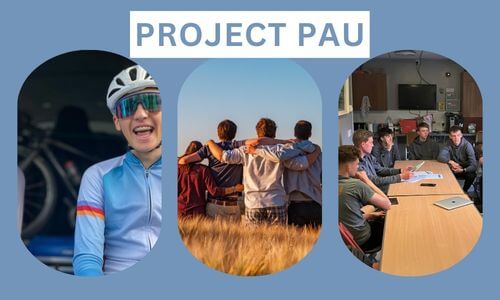
Project PAU is an initiative dedicated to making cycling accessible for all, providing free support, coaching, and resources for junior riders aged 13 to 18 years old to develop their skills and passion for the sport.