
About the Author: Maddie Gammons
Our dedicated Team PAU coach and time trial specialist. With a passion for cycling and coaching, she brings firsthand experience and insight into the world of Zwift racing.
The Transition From Youth To Junior Racing: What to expect
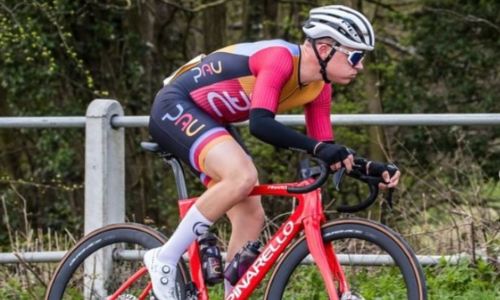
As with all sports, as you progress through the ranks the demand steps up both in terms of physiology and racecraft. The biggest jump in demand is seen when riders move up from youth to junior cycling. To go from racing on a closed circuit for 45mins-1hour to racing 3-4hour road races on varying terrain is a big change that has to be accounted for in training and other aspects such as nutrition and tactics.
So what are the differences and how can we prepare for them? Read on to find out!
Race Duration: How Longer Races Affect Youth to Junior Cycling
The first and most obvious difference is the change in duration. The increased duration of these races places a greater focus on muscular endurance as fatigue has more time to develop and therefore can have a bigger impact on performance. To overcome this and ensure you go into the season with the best preparation, the body needs to be used to spending a prolonged period of time on a bike. This means endurance rides of 3-4 hours are a key focus in winter training. If you ride for the same durations as the races, when it comes to racing your muscles will already be accustomed to the duration of work required. These training rides should be completed at a steady state (zone 2) to avoid compromising efforts and to build baseline fitness. A good indicator that you are in the right zone is still being able to talk while riding without getting out of breath.
Energy Requirement: Fueling and Nutrition for Junior Cyclists
Riding for a longer period of time at “race pace” increases the demand for energy to help delay fatigue and maintain power for longer. In youth racing the focus for nutrition is mainly pre race as there is not enough time for food to be consumed and processed in order to have an effect on the racing outcome. However, due to the increased duration in Junior races, in race nutrition plays an important role in muscle function and energy provision. To prepare for this, riders can practice fueling during training rides so when it comes to race day their body is used to the volume of carbohydrates and can effectively process them. Carbohydrate requirement varies between riders depending on a variety of factors but it’s recommended to start with an aim of 60-80g per hour. Fuelling also includes hydration and it is recommended to consume a bottle every hour when racing or training.
Recovery & Repeatability: Adapting Training for Junior Racing
Due to the increased duration the demand for a rider to be able to reproduce high power efforts in quick succession for an extended period of time and also multiple times over a more prolonged time period, training needs to incorporate this. Sessions with the efforts being placed towards the end of the ride can help to ensure power is reproducible at the end of a ride whilst the rider is under fatigue. Other useful sessions include those with limited rest between high intensity efforts to help improve recovery time and be able to deal with back to back efforts when it comes to racing.
Recovery & Repeatability: Tactical Changes from Youth to Junior Cycling
Another big change is racecraft. The racing starts to get a bit more calculated and you start to see some teams working together to gain results. This is where you can gain great value in knowing your competitors so that you can make a split second decision if it is worth going with a break or staying in the bunch. This can also help with choosing wheels to follow coming into a sprint. A really good way to help improve your own racecraft is by watching races. There are plenty of race replays available on youtube to help learn from the best.
Terrain: What Changes When You Move to Junior Races
Although the terrain can vary on a circuit, climbing tends to be very limited with very few circuits in the UK containing climbs. In contrast the majority of British road races are fairly rolling with very few flat races (especially at National level). This means it might be worth considering your training routes and if climbing is something you struggle with then incorporating more elevation into your training may be a good idea.
Racing Categories in UK Junior Cycling: Understanding the Progression
When you move up from youth to junior you will either be a 3rd or 4th cat. This means you will be limited to road races for these categories. 3/4 road races tend to be slightly shorter in length so offer a nice middle ground when it comes to race duration. These will be riders of all ages so there tends to be a bit more of a spread in the ability in these races. Most first year juniors aim is to gain their 2nd cat, this requires the rider to gain 40points in a single season which allows them to enter higher profile races and increases likelihood of selection in oversubscribed events. There is also a Junior National Series put on in the UK that is solely riders aged 16-18. These races tend to be faster than the 3/4 races with a more aggressive racing style.
PROJECT PAU: Free Coaching and Resources for All Junior Cyclists
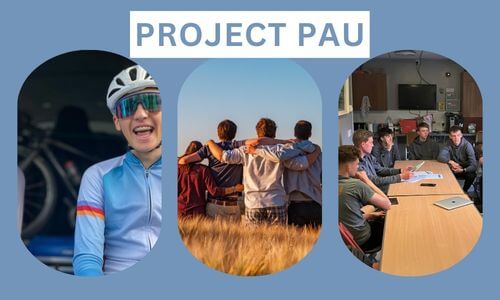
Project PAU is open to all junior riders aged 13–18 and provides free support, coaching, and resources to help develop skills, knowledge, and a passion for cycling. Every week, Coach Maddie hosts live webinars covering training, racecraft, nutrition, and the transition from youth to junior racing. Sign up today to access these sessions and take your cycling to the next level.

WHAT IS GAIT ANALYSIS? Gait analysis looks at how your body moves when you run. It looks at things like your stride, cadence, foot movement,…
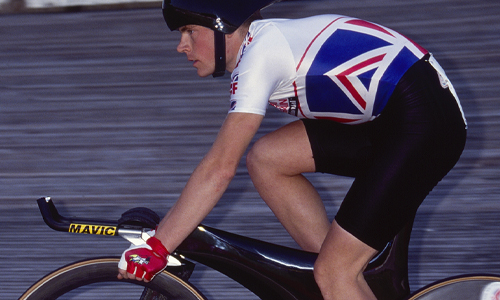
AN INTIMATE EVENT WITH JUST 40 GUESTS We’re hosting a very special evening at PAU Café with Bryan Steel, Double Olympic Medallist and Former Team…
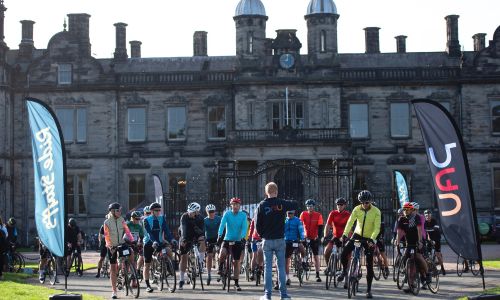
SANDON CENTURY 2026 EVENT RECAP Thank you to all riders who joined us for Sandon Century 2026! What an incredible day on the bike. From…