
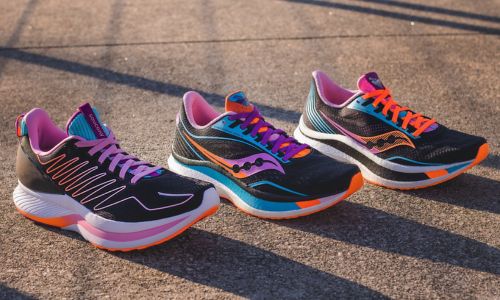
Maximise your running performance and achieve new PBs with shoe rotation.
This journal explains what shoe rotation is, and why every runner should be rotating their shoes for success…
RUNNERS: WHY YOU SHOULD ROTATE YOUR SHOES
Your running shoes can make or break your PB, not to mention preventing or aiding injury to occur, along with a whole host of other things. A running shoe rotation can be the answer to these conundrums and more, so here’s what you need to know.
Why runners should rotate their shoes
There are a few solid reasons why you might decide to rotate your running shoes, with the first one being that they last longer. Rotating your shoes puts less strain on the trainers, meaning that they get a longer lifespan and stay on top form for longer. Another reason might be that different shoes play different roles, which we will get into in a moment, as well as the fact that your shoes need a break from running as well.
Different types of shoes
There are three main types of running shoes you might want to add into your rotation. For a full in-depth breakdown on the different kinds of shoes, Explore The Different Types of Running Shoes here.
The everyday Shoe
Your old faithful, the everyday running trainer. These should be your go-to and most comfortable, and you might even have a couple of these in your rotation. Go for trainers that are similar (if not the same) in style to make sure they’re as close a match to your feet as they can be, and that you don’t have too much difference between trainers.
The Speedwork Shoe
For your training, they might be lighter and brighter than your everyday trainer, and offer durability along with flexibility for those workouts.
The racing shoe
These are usually carbon-plated and designed for race days. If you pick out a pair, make sure you’ve given them a road test before heading out on a race, no one wants a surprise blister 10K in.
The Benefits of Shoe Rotation
We touched on the shoes not wearing down as quickly but it is a serious consideration. As the shoes start to wear down, you will run differently, which can cause you to pronate or supinate, impacting your running capabilities and throwing yourself off-centre. You need to think about replacing your shoes or adding another into your rotation about halfway through their lifespan, if not before.
Following on from this, a good shoe rotation helps to prevent injury, as the midsole of your shoe needs time to recover (yes, really), so if you’re using the same trainers everyday, your running experience will differ and your body will overcompensate – resulting in injury or pain.
If you run a few times a week, you need a solid plan for shoe rotation and you should regularly get gait analysis to ensure you’re wearing the best type of shoes for your unique gait. Click here to learn more about gait analysis and its benefit for runners. We offer FREE gait analysis in all three of our PAU Run & Ride stores across Staffordshire and Cheshire.